Elizabeth Fry: ‘The Angel of Prisons’
The story of prison reformer Elizabeth Fry as told by those incarcerated in Newgate Prison
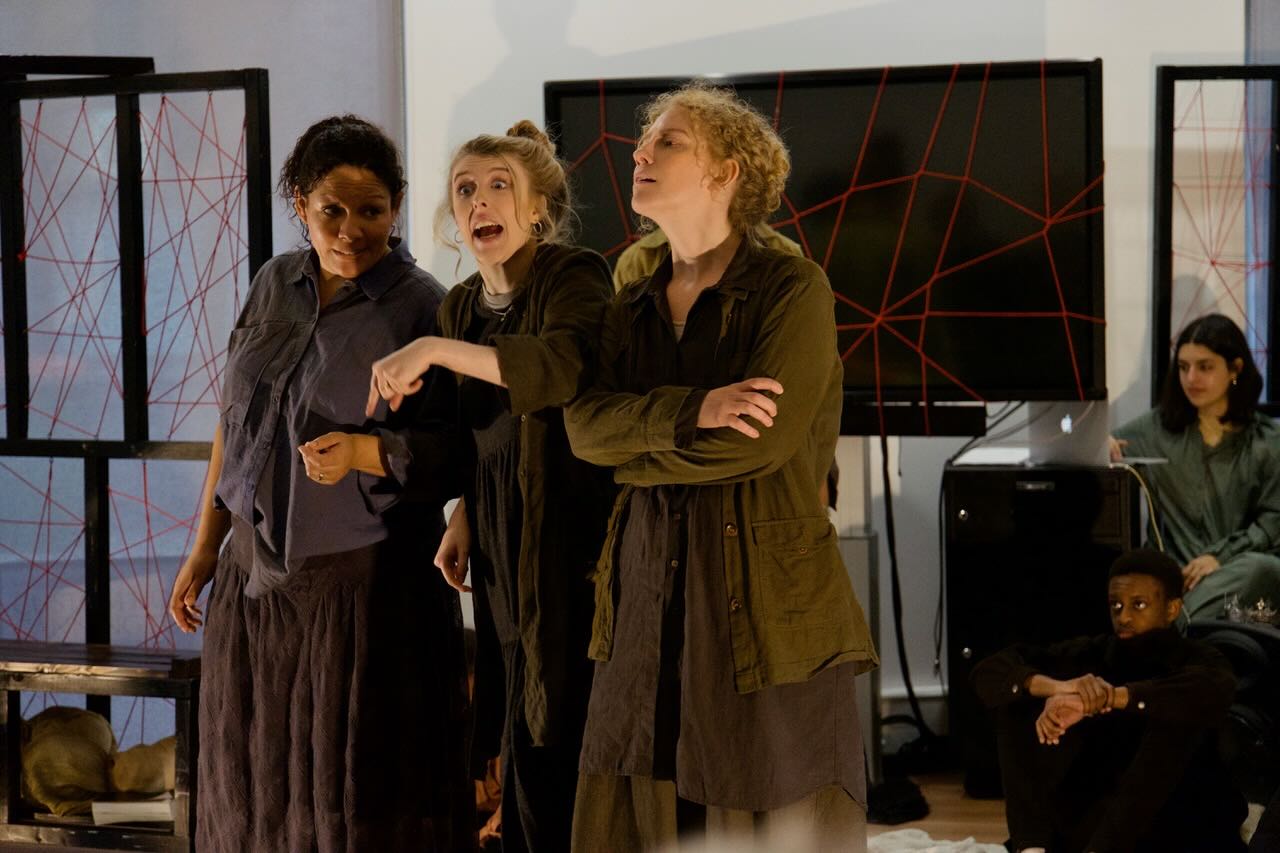
Three prisoners have a story to tell. It’s the story of Elizabeth Fry and how she changed prisons forever. But this is not a history lesson. You’ll hear both contemporary and historical language. You’ll see both modern-day and period mashup costumes. Because the question remains the same today as it did in Elizabeth Fry’s time: does prison work?
Elizabeth Fry is forever linked to Newham because she and her husband lived from 1829 to 1845 in Upton Lane House, West Ham. In addition to her prison work, she was a regular visitor at gypsy encampments in Plashet, dispensing food, clothing and medicine to the local Gypsy and Irish communities.
Elizabeth Fry: ‘The Angel of Prisons’ was staged in Canning Town Library’s Elizabeth Fry Room and garnered significant critical attention and was warmly reviewed.
The play was recently performed, very aptly, at Friends Meeting House, a Quaker meeting house in Aylesbury, Buckinghamshire, built in 1726–27. This script-in-hand performance was followed by a post-show Q&A led by a Quaker chaplain currently working in prisons, and a retired prison governor. It was produced in partnership with Unbound, an award-winning Buckinghamshire-based production company working in theatre, audio and film, and based at Queens Park Arts Centre in Aylesbury, Bucks.
“Kenworth’s production is an inspiration for theatre makers across London. The ‘Pro-localist’ ethos, combined with facilitating a local community space, could be the answer to countless fringe and off-west end theatres having to close their doors across London.”
- London Theatre Reviews
“The story is compelling and informative... This hyper-local history play about penal reformer Elizabeth Fry has heart.”
- Nick Curtis, Evening Standard
“The script, by James Kenworth, blends present-day London vernacular with the dialect of the early 19th century. It’s easy to watch and it delivers heaps of information without any hint of lecture-hall formality.”
- Lloyd Evans, The Spectator