The Newham Plays
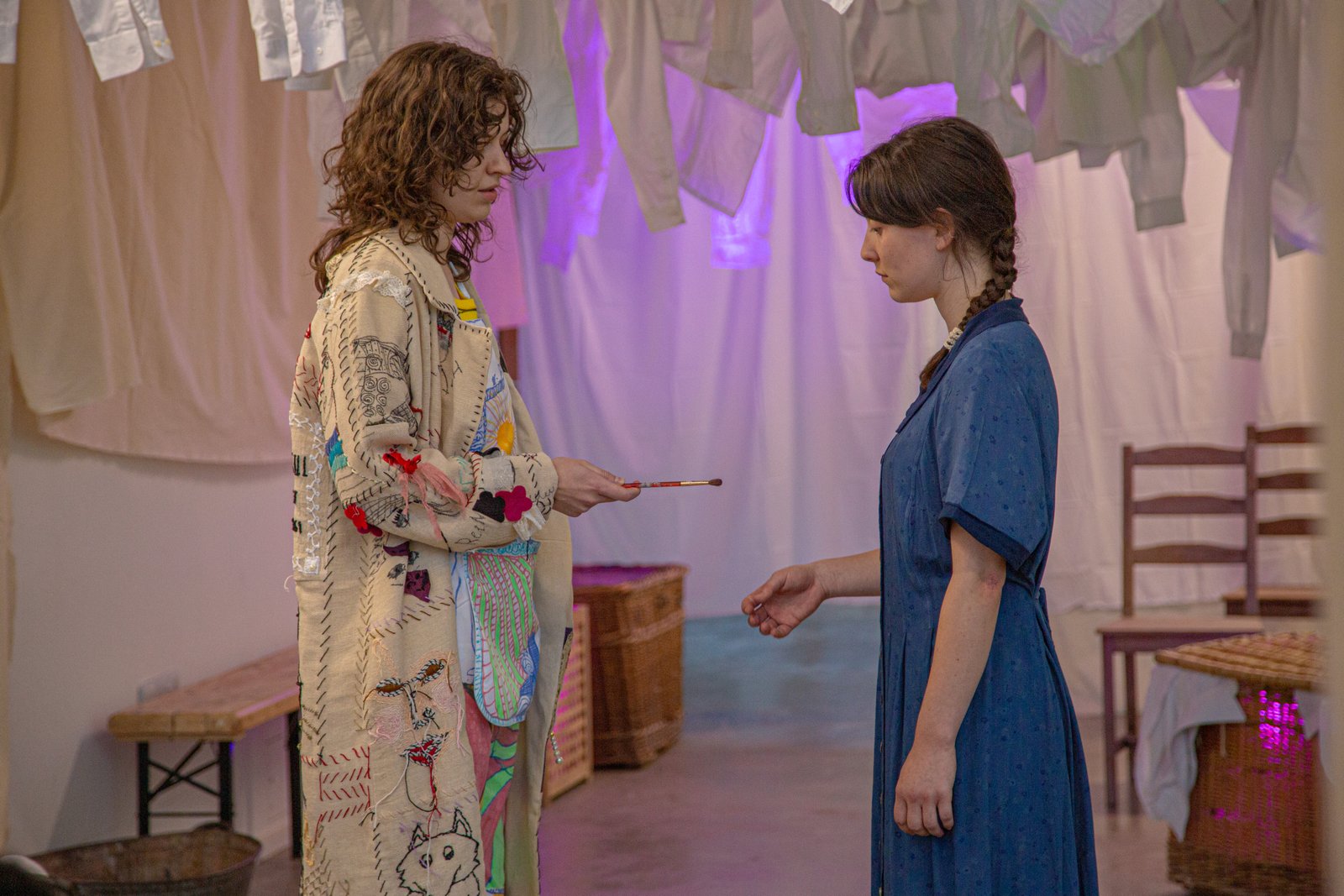
The Newham Plays are a groundbreaking theatrical series by former long-term Newham resident and Playwright/Creative Writing Tutor James Kenworth, celebrating the stories, spaces, and people of Newham, East London. Staged in site-responsive locations, the plays merge professional performance with public participation, particularly involving local youth. These productions aim to reconnect Newham’s residents with their cultural roots, reinterpreting history and literature through a local, socially conscious lens.
Each play in the series draws inspiration from Newham’s diverse heritage. When Chaplin Met Gandhi (2012) dramatizes the unexpected meeting of Gandhi and Charlie Chaplin in Canning Town. Revolution Farm (2014) modernizes Orwell’s Animal Farm with urban grit and a youth-oriented visual style, performed at Newham City Farm. A Splotch of Red: Keir Hardie in West Ham (2016) follows Labour founder Keir Hardie’s 1892 socialist campaign in West Ham, highlighting the area’s political radicalism; the play toured Newham Libraries and Community Links’ Neighbours Hall.
Alice in Canning Town (2019) reimagines Alice in Wonderland with grime, multiculturalism, and a surreal adventure playground setting in Canning Town’s Arc in the Park. Elizabeth Fry: ‘The Angel of Prisons’ (2022) explores the legacy of the famed prison reformer and humanitarian, staged in the Elizabeth Fry Room at Canning Town Library.
Myrninerest: The Outside/Inside Life of Madge Gill (2024), premiered at Art in the Docks, an artist-led social enterprise in the Royal Docks, is an intimate portrait of Madge Gill, a self-taught Outsider artist and spiritual medium from Newham. Three Ghosts of Silvertown, at the historic Tate Institute in Silvertown, reimagines the famous Silvertown Strike led by Eleanor Marx through the voices of ghosts determined to reclaim a history of exploitation, loss, and resistance.
Critics have praised the plays’ emotional depth, cultural relevance, and inventive use of local spaces. Reviews highlight their blend of accessible language, community outreach, and theatrical excellence. Kenworth’s work has been recognized as a powerful model for hyper-local theatre, demonstrating how storytelling rooted in place and people can engage, educate, and inspire.
James has enjoyed a productive and successful collaboration in his writing career with fellow playwright and good friend James Martin Charlton. He says:
“I don’t think I’ve ever really wanted to direct my own plays simply because I’ll readily admit I just don’t think I have the patience, tolerance, or ‘people management’ skills. I just want the actors to bloody well get on with it and do the play the way I’ve written it! End of story. That’s not exactly a helpful Director’s note. As well as being a playwright himself, JMC is an experienced, confident, and self-assured director; he’s also easy-going too. This is fortunate for me. His patience with me in the rehearsal room is impressive. He knows my writing style inside out, understands both instinctively and intellectually how plays are put together, and our playwriting heroes/icons are pretty much the same: Berkoff, Bond, Barker, Jim Cartwright, Tony Harrison. These mighty heroes all have one thing in common; they are ‘theatrical’ writers, their words/language work best on stage, nowhere else, just the stage. They’re the modern heirs to Shakespeare, Marlowe, Jonson. Just the kind of playwrights I like. JMC directed my debut and follow-up, Johnny Song at the Warehouse Theatre and Gob at the King’s Head Theatre. Gob became a major London hit in 1999, not least for featuring a certain former boy-band star at the height of his post-pop reinvention (see About section for more details).
JMC went on to direct four of the Newham Plays: Revolution Farm, A Splotch of Red: Keir Hardie in West Ham, Alice in Canning Town, and Elizabeth Fry: ‘The Angel of Prisons’. He’s responded imaginatively to directing the plays in non-traditional, unorthodox spaces in Newham, including an inner-city farm, public libraries, and an adventure playground. It hasn’t been easy. We have only two weeks’ rehearsals to put the show together (the National Theatre get six or seven — oh the luxury). We have no lighting, no scenery, a bare minimum of props. There are no pre-show drinks. And no ice creams during the interval. And if it’s an outdoor show we must pray for the rain to stop so we don’t have to cancel a performance. In all of this, JMC has remained admirably calm under pressure. Which is just as well. Because you have to really care about this kind of theatre-making to be able to do it. It needs to mean something. Something almost fanatical. To paraphrase Bill Shankly’s famous verdict on football: ‘Some people believe theatre is a matter of life and death, I am very disappointed with that attitude. I can assure you it is much, much more important than that.’ And that’s the only kind of person I want to let loose near my plays.”
“Newham Library is a perfectly intimate theatre for this visceral tale. By stripping away the glitz and glam of the west end, but still hinting at the period with clear costume and a DJ set list to suit, the heart of the story finds an empathetic nuance. The company create an encompassing bubble, keeping us gripped from our cushions merely feet away from the action. Kenworth’s production is an inspiration for theatre makers across London. The ‘Pro-localist’ ethos, combined with facilitating a local community space, could be the answer to countless fringe and off-west end theatres having to close their doors across London.”
- London Theatre Reviews on Elizabeth Fry: ‘The Angel of Prisons’